Last Mile Delivery Platform: What Delivery Software Replaces
What a last mile delivery platform replaces for logistics teams: manual dispatch, status calls and paperwork. Compare tiers and pricing models.

Delivery & Couriers
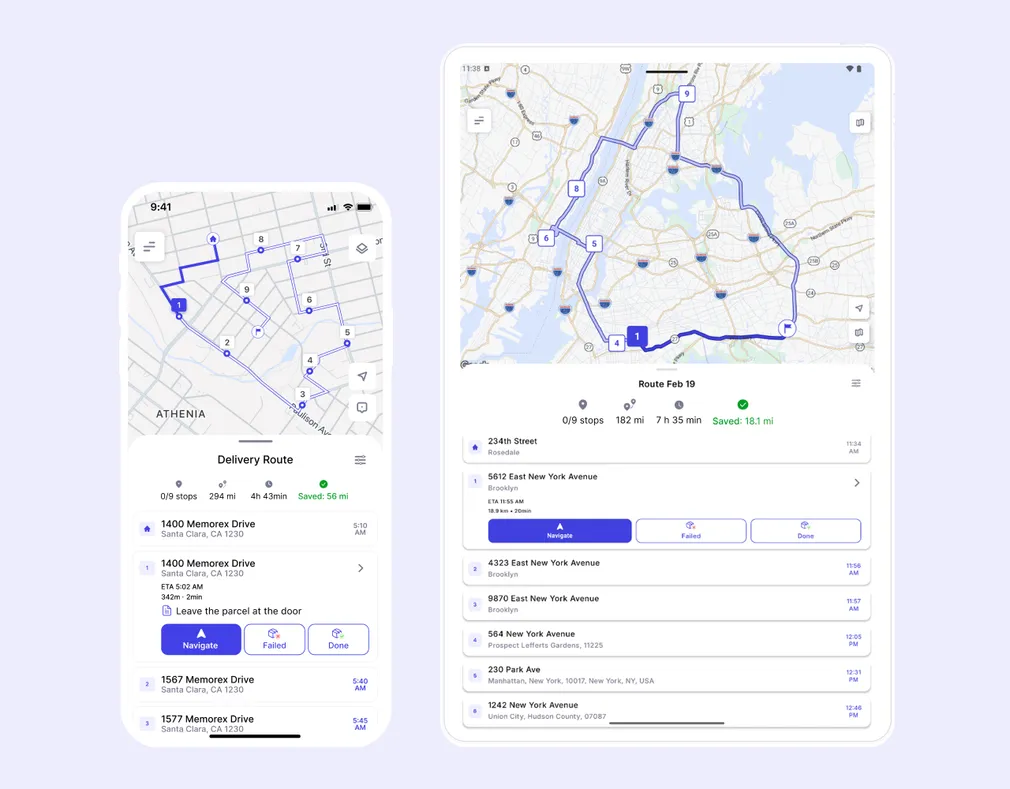
The last mile is where delivery operations become unpredictable and expensive. At this stage, your routes have to deal with real-world conditions like traffic, unavailable customers, and tight delivery deadlines all at the same time.
One small route mistake can trigger a chain reaction. You begin burning more fuel, spending more time on the road, and putting even more pressure on drivers to stay on schedule. Without proper planning, drivers are more likely to go back and forth, wait between stops, or miss delivery windows altogether.
Fuel and labor costs are the most visible expenses, but they are not the only ones. When deliveries fail, you may end up doubling the cost of a single stop.
Overtime also adds up quickly when routes run longer than expected. At the same time, manual planning introduces small inefficiencies that repeat every day. That is why businesses start looking for a route optimization app to cut last mile delivery costs.
Manual route planning works best when delivery volume is low. But when a business starts growing, it becomes difficult to keep everything running smoothly with a basic spreadsheet or a simple map app.
Routes planned by hand often ignore the most efficient stop order. Drivers may cross the same area multiple times or take the long way between deliveries. Before long, you are adding unnecessary mileage and increasing fuel costs.
Another common issue is low delivery density. When stops are not grouped effectively, drivers spend too much time traveling between deliveries and complete fewer stops per route. That pushes overall costs even higher.
Manual planning also struggles with change. If a new order comes in, a delivery is canceled, or road conditions shift, it is hard to adjust the route quickly without starting over. That delay creates inefficiencies throughout the day.
All of this limits effective last mile delivery optimization. Instead of improving performance, the system stays reactive and inconsistent.
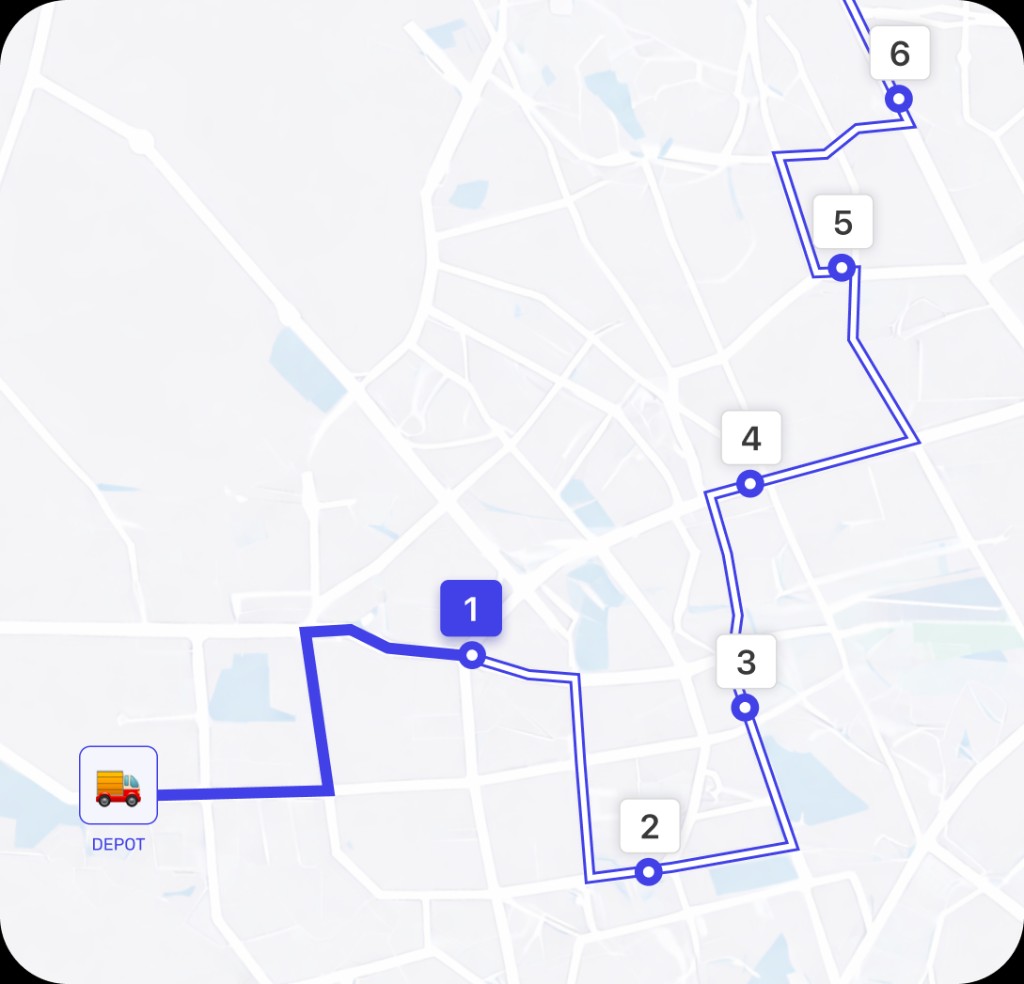
A route optimization app removes the guesswork through structured, data-driven planning. Instead of building routes one stop at a time, the system calculates the most efficient path automatically. This saves time, fuel, and effort.
The app delivers cost reduction in practical, measurable ways:
In this way, the app cuts costs while also improving reliability and productivity. Over time, these improvements become visible across the whole operation.
To control delivery costs, it helps to understand exactly where the money goes. The main cost drivers in last-mile delivery include:
Using delivery route optimization software helps reduce these costs by improving how routes are structured and carried out. That is especially important when managing deliveries with strict delivery time windows.
If your goal is to reduce delivery costs, some features matter much more than others. A strong routing tool should include:
The right last mile routing software combines these features to improve efficiency through better stop sequence optimization. This directly reduces time and cost per route.
Cost reduction is not only about cutting miles. It also makes your routes more productive. When routes are optimized, drivers do not need to guess what comes next. They can follow a clear, structured plan.
Better routing also creates more consistent performance throughout the day. Drivers can complete more stops within the same working hours, and customers benefit from receiving orders on time.
Accurate ETAs also play an important role. When drivers follow a well-structured route, it becomes easier to predict arrival times. This reduces delays, missed deliveries, and the need for rushed or last-minute changes.
Better routing does more than save money. It also improves the overall delivery experience. Customers receive their orders on time and have clearer expectations around delivery windows. This reduces frustration and builds trust in your service.
Internally, operations become more predictable. Routes are easier to manage, daily planning takes less time, and there is less pressure to solve problems during the day.
As delivery volume grows, these improvements support growth as well. A system that works efficiently at a small scale can continue performing as the business expands.
Choosing the right routing tool comes down to how well it fits your real workflow. The goal is to find something that improves efficiency without adding complexity. Here are a few things to look for when evaluating your options:
A solution like Optiway is designed with these needs in mind. It helps delivery businesses simplify planning, build better routes, and stay in control of their costs as they scale.
Smarter routing is not only about efficiency. It is also about protecting your margins. When routes are optimized and consistent, your savings build up every day, making your delivery operation stronger and more scalable over time.
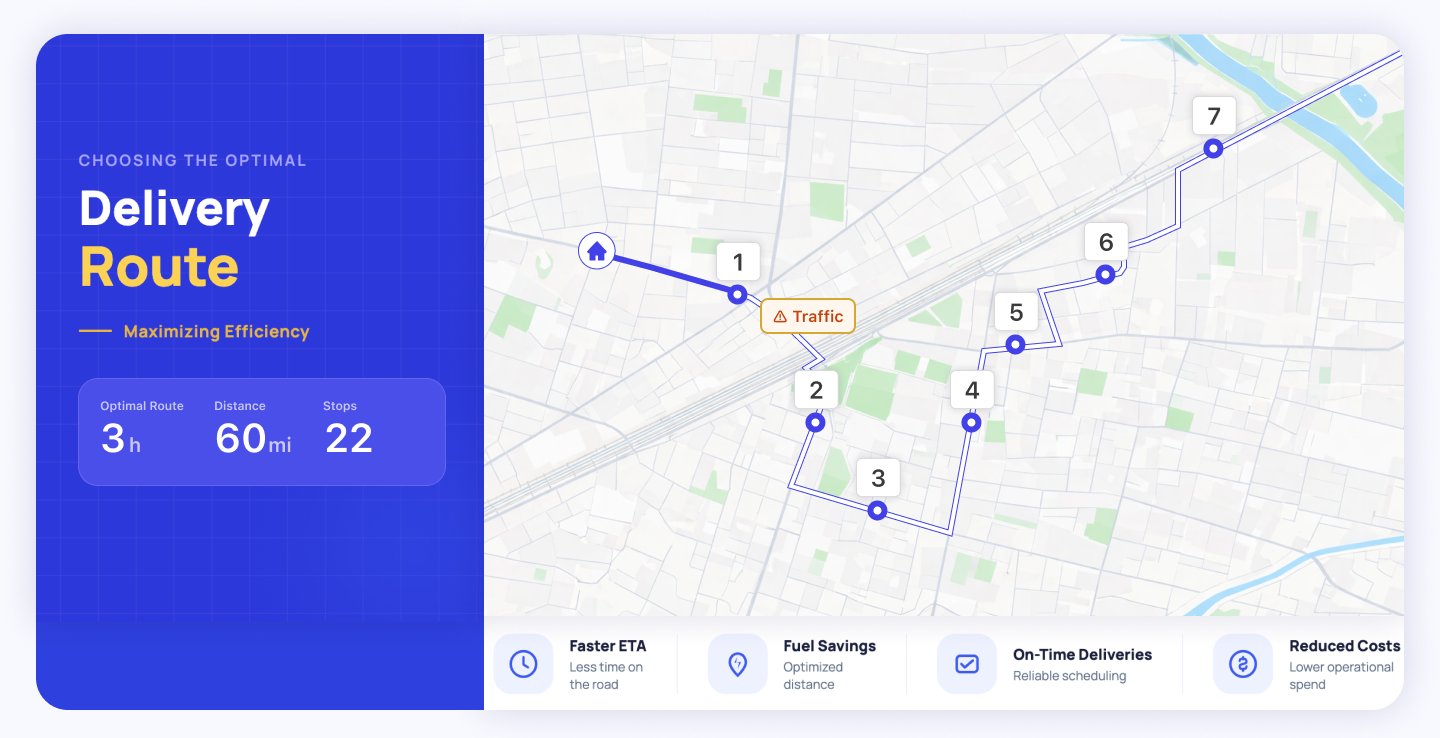
Last Mile Delivery Platform: What Delivery Software Replaces
What a last mile delivery platform replaces for logistics teams: manual dispatch, status calls and paperwork. Compare tiers and pricing models.
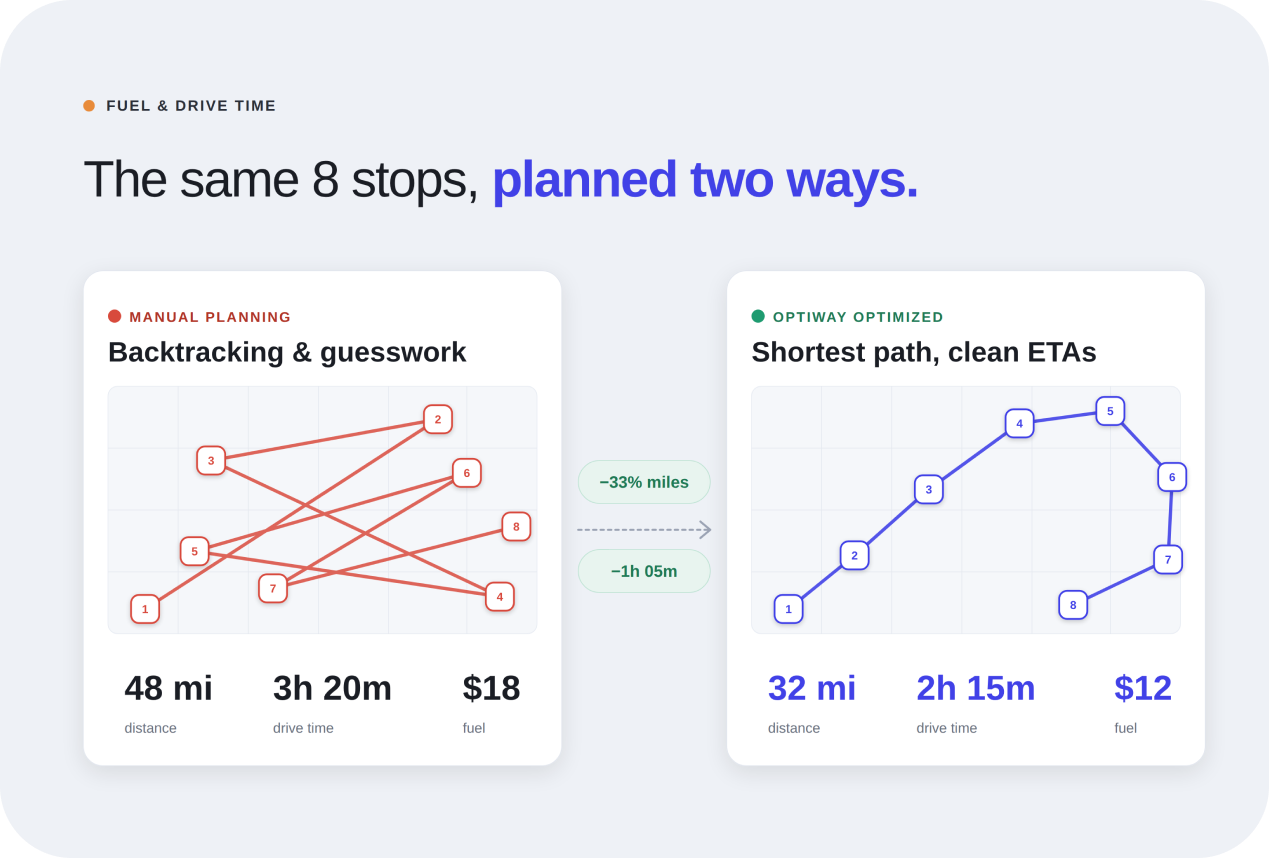
Delivery Route Planner App to Save Fuel and Drive Time
Optiway helps delivery teams plan tighter routes, spend less on fuel, and get more done in fewer driving hours — every wasted mile adds up fast.
Delivery Route Planning Best Practices - A Practical Daily Checklist by Optiway
Optiway puts your stops in a clean driving order — fewer loops, less fuel, calmer deliveries, and quick edits when plans change.
Why Google Maps Falls Short for Truck Routes
Where a navigation app stops being enough for commercial multi-stop routing.
A fast, lightweight app that holds the whole day — and keeps working when the signal drops.



Start with a free trial — cancel anytime.