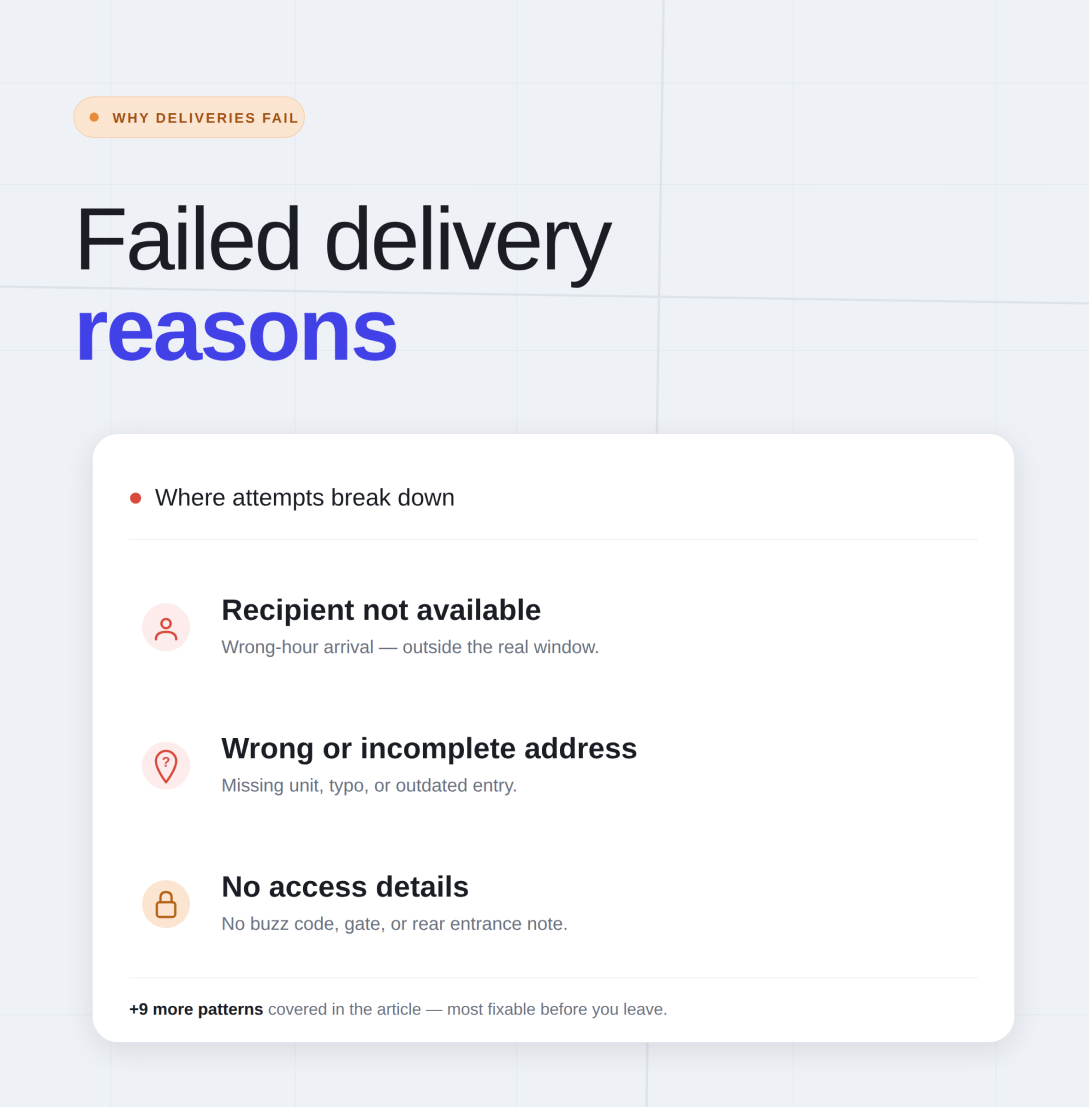
Why Deliveries Fail: 12 Common Reasons and How to Prevent Them
The most common causes of failed deliveries — wrong addresses, missed time windows, bad sequencing — and how smarter routing prevents costly redos.

Solutions
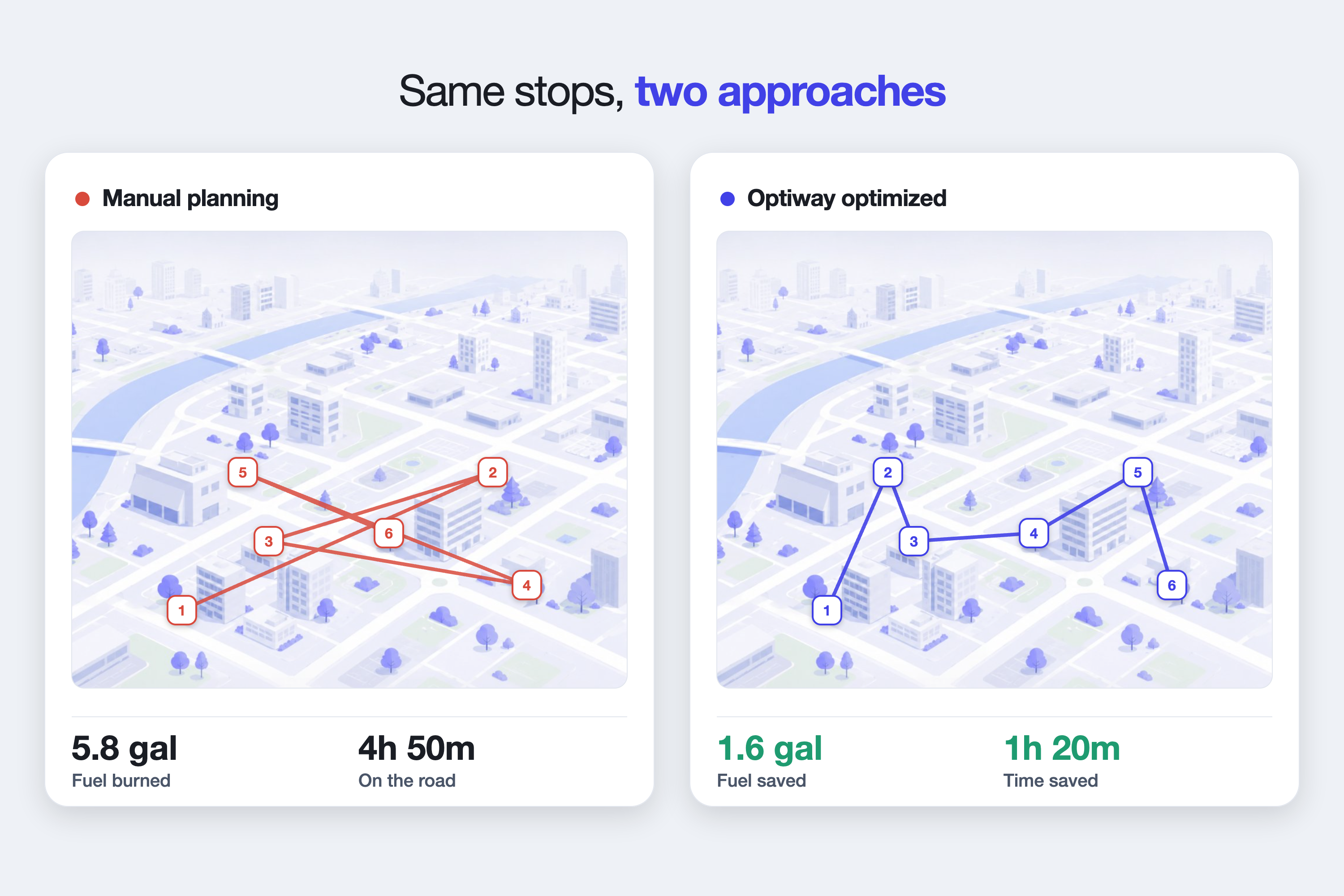
Running an online store means the sale is only half the job – the order still has to reach the doorstep on time. For most retailers and dispatchers, that final step is held together by spreadsheets, a consumer maps app, and a lot of manual effort. Without an ecommerce delivery management platform, every busy day turns into a scramble.
The friction rarely comes from one big failure. It builds from the same operational pain points repeating across every batch:
Stacked together, these gaps make fulfillment logistics software feel less like a luxury and more like the only way to grow without piling on overhead.
A general map app was built to get one person from A to B. A dedicated ecommerce delivery management platform is built to move dozens of orders through a city in the right order, on schedule, every day. That shift from directions to operations is what changes the economics of online retail.
Good ecommerce delivery management software automates the parts that drain your morning: it sequences multi-stop routes automatically, assigns them to drivers in seconds, and keeps everyone connected through a real-time tracking system. Instead of calling drivers for updates, dispatchers watch progress live and react before a route slips.
For an online retailer, that means predictable delivery times even when volume swings from a quiet weekday to a promo-day peak. Pairing delivery management software for ecommerce with your existing order flow gives you a fulfillment process you can scale without a bigger back office.
Plans only hold up if you can adjust them live. Real time dispatch software distributes new orders to the nearest available driver instantly, so nothing waits in a queue while the clock runs.
It also gives managers real-time control over every active route. As a dispatch management software layer, it shows where each driver is, what is already done, and what is next – turning a static morning plan into an operation you can steer all day.
This is where Optiway earns its place. As an ecommerce last mile delivery software, it focuses on the final leg where most delays and costs hide, giving drivers a clear plan and giving you visibility from dispatch to doorstep:
Built as a shipping optimization platform rather than a navigation app, Optiway connects planning, execution, and tracking in one place – so the last mile stops being the part of the day you dread.
The point of an ecommerce delivery management solution is not features for their own sake – it is return on every route. For high-volume retailers, Optiway turns better routing into measurable gains:
From accurate ETAs to inventory fulfillment, the right delivery management solution keeps high-volume operations predictable instead of chaotic.
Plenty of last mile delivery companies promise efficiency, but most tools sit at one of two extremes: a basic maps workflow that breaks at scale, or a heavy enterprise suite that takes months to roll out. Optiway is built for the middle, where most online retailers actually operate – and the same routing engine scales up to last-mile delivery for 3PL and logistics teams as you grow.
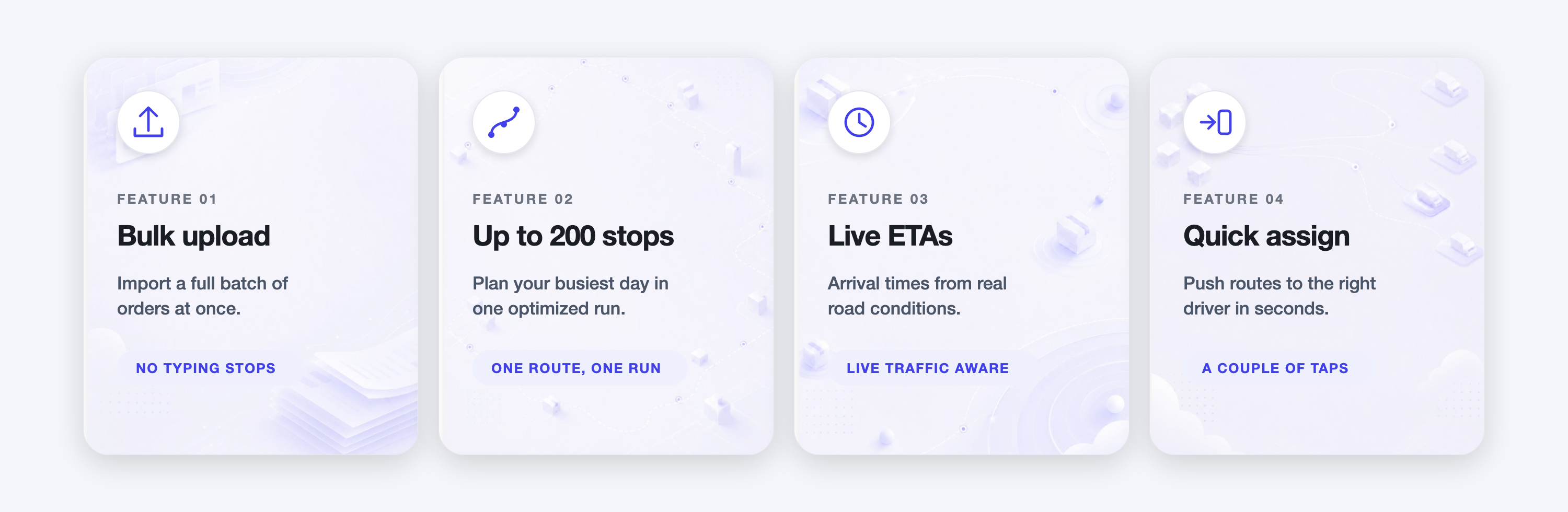
What makes it one of the best options for last-mile delivery is the balance of power and simplicity. It handles up to 200 stops per route, yet the interface is clean enough for a new driver to learn in a morning. You get serious routing capability – and a complete ecommerce delivery management platform – without the setup cost, the training burden, or the bloat.
What is an ecommerce delivery management platform?
An ecommerce delivery management platform is software that plans, sequences, and tracks online-order deliveries from dispatch to doorstep. Instead of relying on spreadsheets and a consumer maps app, retailers upload a batch of orders and the platform builds an optimized multi-stop route, assigns it to a driver, and provides accurate ETAs. Optiway is built for high-volume retail delivery and supports up to 200 stops per route.
How many delivery stops can I plan per route?
You can add and optimize up to 200 stops per route, so you can plan even your busiest fulfillment days in a single optimized run.
Can I import my online orders in bulk?
Yes. Optiway supports bulk address upload, so you can import a full batch of orders at once instead of typing each stop manually. This keeps your morning planning fast even when order volume spikes on promo days.
Does Optiway provide accurate delivery ETAs?
Yes. Optiway calculates ETAs using real-time traffic conditions, not just distance, so arrival estimates reflect what is actually happening on the road. Accurate timing means fewer missed time windows and fewer failed delivery attempts.
Is there a free trial, and how does billing work?
Yes. You can start with a free trial to explore all features before committing. After the trial ends, your subscription renews automatically unless canceled through your App Store or Google Play account. You can cancel anytime in your store settings.
You do not need a bigger team to fix delivery – you need a smarter plan. Start with a single route, upload your next batch of orders, and watch Optiway build the optimized sequence in seconds.
See how much time comes back to your day before you commit to anything. Start your free trial and route your ecommerce orders with the confidence that every stop is in the right place, at the right time.
Why Deliveries Fail: 12 Common Reasons and How to Prevent Them
The most common causes of failed deliveries — wrong addresses, missed time windows, bad sequencing — and how smarter routing prevents costly redos.

Delivery Driver Navigation App with Multi-Stop Routes
See how Optiway turns an optimized stop order into clear turn-by-turn navigation so drivers move from dispatch to doorstep without guesswork.

Multi-Stop Route Planner for Small Business Deliveries
The same routing engine, scaled for small teams — plan, optimize, and deliver local orders without enterprise overhead.
Plan, assign and track every driver — live, from one dashboard.