In today's logistics world, slicing costs and shaving minutes off delivery times isn't just a goal — it's a competitive necessity. Whether you're running a bustling urban fleet or managing regional deliveries, picking the right type of route impacts fuel spend, customer satisfaction, and operational throughput. Optiway exists to illuminate that choice with data‑driven routing and real‑time intelligence.
The critical question isn't simply "which route is faster?" but rather: What really makes one route better than another in a world full of congestion, varying road conditions, and unpredictable delays?
What is the Fastest Route?
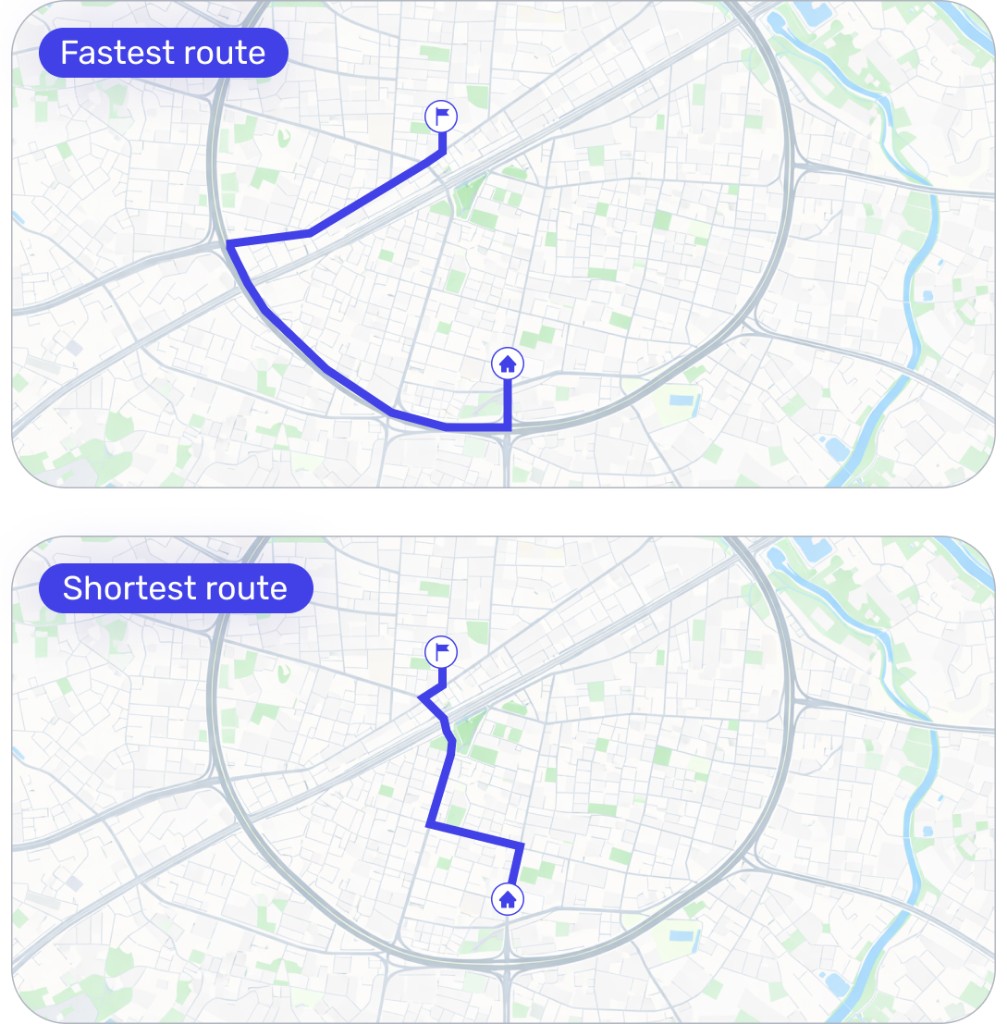
The fastest route prioritizes elapsed travel time above all else. It's the route a driver would take when the clock is the main adversary, leveraging speed limits, live traffic conditions, and road quality to minimize minutes on the road, even if that path winds farther on the map. In other words, the fastest route focuses on how quickly you arrive, not how short the distance is.
Unlike the shortest path, which measures distance alone, the fastest route can "bend" distance logic if it means cruising on highways or bypassing areas with slow traffic flow. This becomes especially relevant when traffic jams, construction delays, or irregular conditions would otherwise slow progress.
Several variables influence this calculation:
- Traffic data and predictive congestion patterns.
- Speed limits and road classifications (e.g., highways vs. local streets).
- Delivery deadline priorities and time windows.
What is the Shortest Route?
The shortest route is defined by pure distance — the fewest kilometres or miles between origin and destination. When planners emphasize this route type, they aim to minimize travel footprint and reduce wear on vehicles.
Yet shorter distance doesn't always translate to quicker arrivals. Congested urban corridors, narrow residential roads, and frequent intersections can inflate travel time despite covering fewer miles. Thus while the shortest route often conserves fuel and reduces vehicle strain, it may run headfirst into real‑world constraints that make it slower overall.
Fastest Route vs. Shortest Route: Key Differences
How Optiway Determines the Best Route
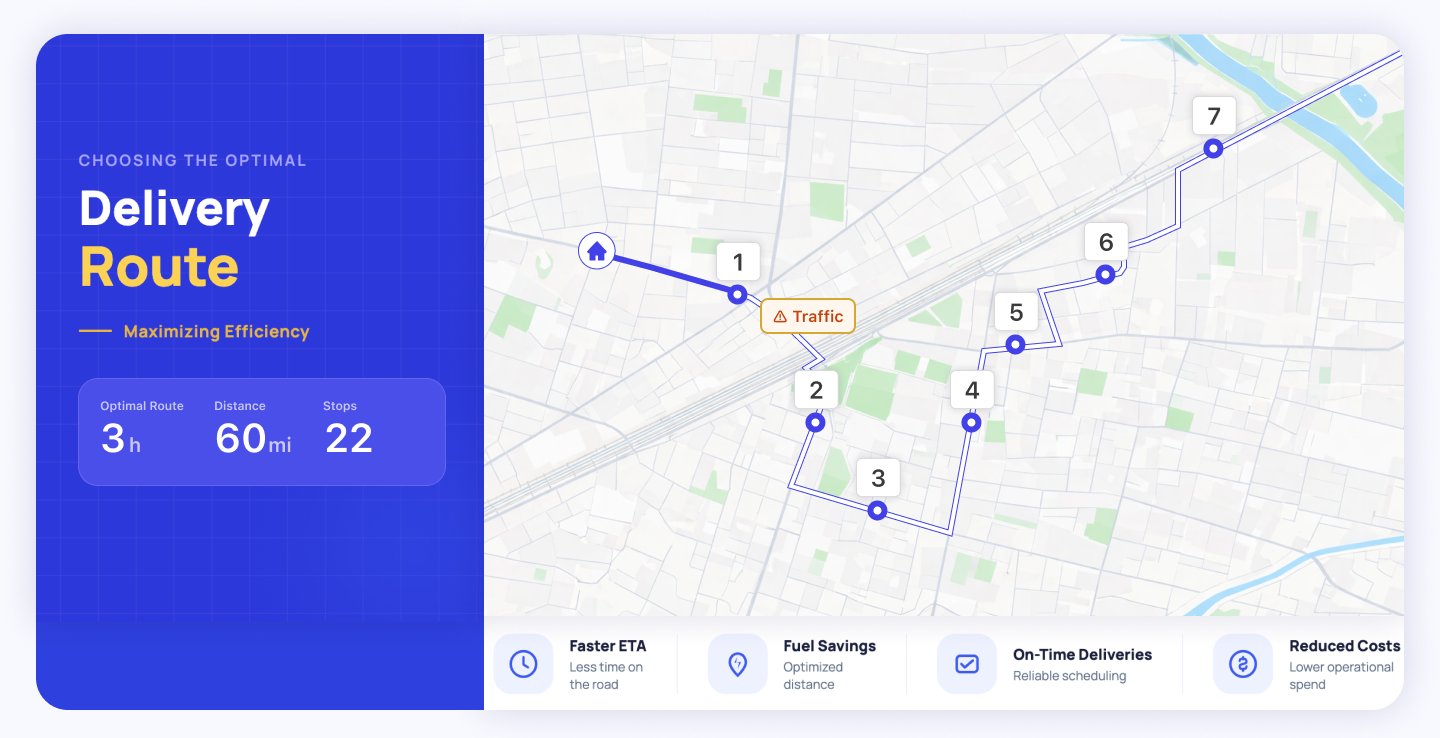
Optiway's routing engine doesn't merely pick one metric and run with it; it integrates multiple layers of intelligence. Beyond distance and estimated travel time, Optiway weighs:
- Traffic insights and predictive congestion models.
- Scheduled delivery windows and customer priorities.
- Vehicle type, the speed limit and the type of road.
- Stop sequencing logic for multiple deliveries.
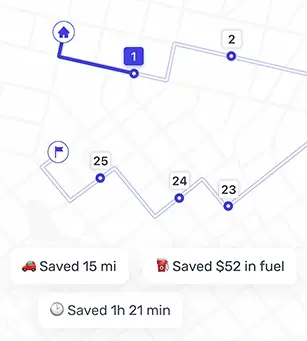
Whether a route aims to cut minutes or kilometres, Optiway's AI tunes your strategy to the realities of your operation — saving fuel where feasible and accelerating delivery where necessary.
When to Choose the Fastest Route in Optiway
Certain delivery scenarios place timing above all else:
- Perishable goods with tight freshness requirements.
- Rush orders and express courier services.
- Time‑sensitive medical or critical supplies.
- High‑traffic urban delivery zones during peak hours.
In these cases, faster arrival often translates to happier customers and stronger SLA adherence. Optiway allows fleet managers to prioritize timing, nudging the routing toward paths that mitigate delays and smooth out delivery anticipation windows.
When the Shortest Route Makes More Sense
Not all logistics problems are best solved under a stopwatch. The shortest route shines when:
- Your primary objective is reducing fuel spend and greenhouse emissions.
- Deliveries are flexible on timing, such as scheduled non‑urgent drops.
- Vehicle wear and maintenance costs are a significant concern.
- Operating in low‑traffic, rural, or suburban networks.
Optiway's flexible settings allow you to emphasize distance minimization when these goals align with your operational priorities, balancing efficiency with environmental and cost‑saving outcomes.
Practical Insight from Industry Perspectives
For instance, shorter routes can reduce fuel consumption and vehicle wear, but they may also traverse slower roads that inflate travel time. Conversely, faster routes can get deliveries done ahead of schedule, but sometimes at the expense of greater distance and fuel use. Choosing between fastest and shortest routing isn't a binary decision. Your decision should reflect the realities of your operations, customer expectations, and strategic goals. Optiway empowers you to make that choice with data at your fingertips, enabling you to tailor routing logic dynamically and intelligently.
With Optiway, you're not picking speed or savings blindly — you're aligning delivery strategy with purpose. Try Optiway to see how intelligent routing adapts to your real‑world delivery goals.